
The short answer: Upholstery cleaning codes tell you which kind of cleaner a fabric can handle. W means water-based cleaners are fine. S means solvent only, with no water. WS (or SW) means either one, used sparingly. X means no liquid cleaner at all: vacuum or brush only. You’ll usually find the code on a tag under a seat cushion or under the frame. Check it before you spot-clean anything.
That small letter can save a sofa. The wrong cleaner can leave water rings, fade colors or shrink fabric, and that damage often can’t be undone. This guide explains each code, what you can safely do yourself, the mistakes to avoid and what to tell a professional cleaner before the visit. It’s a good check to do now, before holiday guests arrive.
Where to find the cleaning code on your sofa
Most furniture makers put the cleaning code on a fabric or paper tag. Ashley Furniture says to look for “a tag either under one of the seat cushions or beneath the unit itself.” Check these spots:
- Under each seat cushion, on the deck of the sofa
- On the underside of the frame or the dust cover
- On the zipper side of a cushion cover
- On the tag on a loose pillow or ottoman
Check each piece. Cushions, throw pillows and the frame can carry different tags, so the code on one part doesn’t always apply to the whole set.
Upholstery cleaning codes at a glance
These definitions come from the furniture manufacturers’ own care instructions (Ashley Furniture’s cleaning codes and Bernhardt’s cleaning instructions).
| Code | What it means | Safe at home | Avoid |
|---|---|---|---|
| W | Water-based cleaners | Water-based upholstery shampoo or foam, used lightly | Solvents; soaking the fabric |
| S | Solvent only | A water-free dry cleaning solvent made for upholstery, used sparingly | Any water, including plain water on a spill |
| WS or SW | Water or solvent | Upholstery shampoo, mild detergent foam or a mild solvent | Saturating the fabric |
| X | No liquid cleaners | Vacuuming or light brushing with a soft, non-metallic brush | Any water- or solvent-based cleaner |
Brands word these slightly differently. For example, American Leather describes X as “professional cleaning only,” while Ashley and Bernhardt describe it as vacuum or light brushing only. The safe reading is the same either way: don’t put liquid on an X fabric yourself.
What you can do at home for each code
W fabric. Blot spills right away with a clean white cloth. Use a water-based upholstery shampoo or foam, apply it lightly, and blot instead of scrubbing. Let the area air dry. Bernhardt’s instructions say “Do not over wet.”
S fabric. Keep water away from it, even for a quick spill. American Leather notes that water “can cause damage or leave unsightly rings” on S fabrics. Use a small amount of water-free upholstery solvent on a cloth, not on the fabric. Open a window and wear gloves when you use solvents.
WS or SW fabric. You have more options, but the rule against soaking still applies. Bernhardt adds that hot water extraction or steam cleaning is not a recommended method for its SW fabrics. That is one more reason a professional should look at the tag before choosing a method.
X fabric. Vacuum with an upholstery attachment and brush lightly with a soft brush. For a stain or deeper cleaning, call a professional instead of trying a cleaner.
For every code: test first. Bernhardt tells owners to “pretest a small, inconspicuous area before proceeding,” such as the back or underside of a cushion.
Mistakes that ruin upholstery
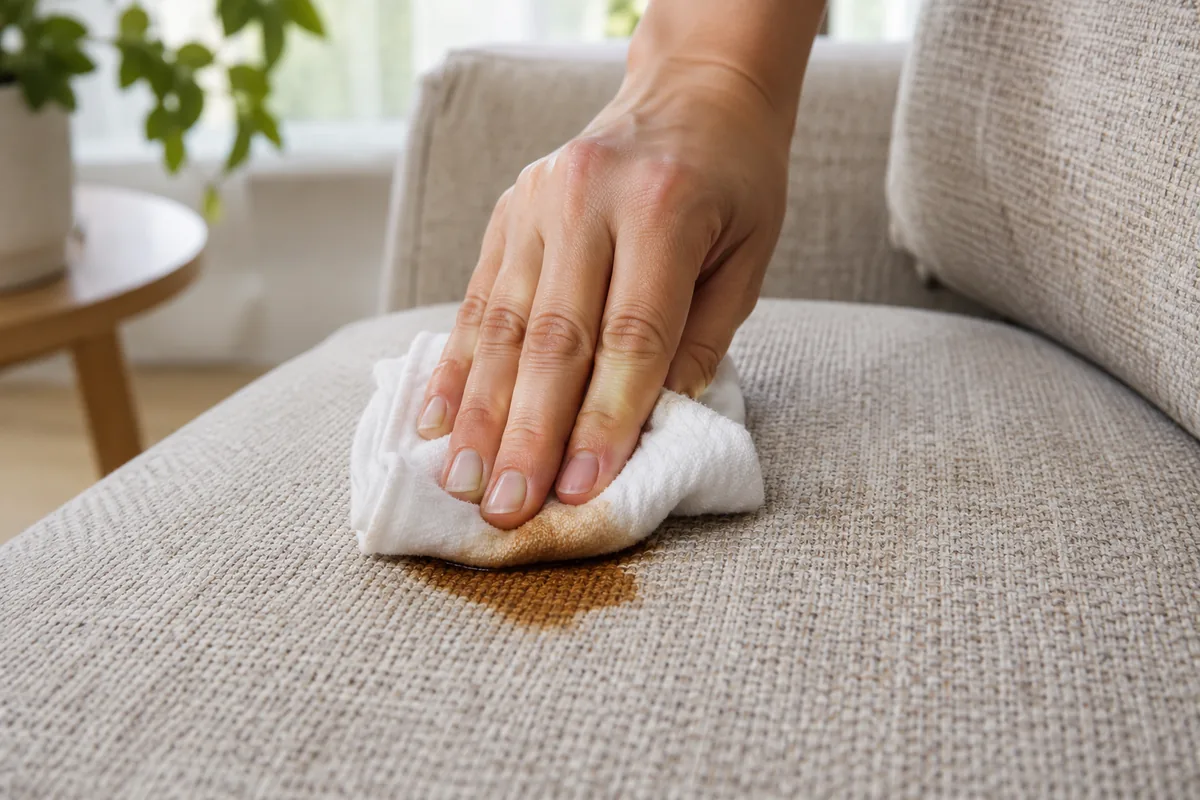
- Taking off zipped cushion covers to wash them. Ashley says cushion covers “should not be removed and laundered,” and the same goes for dry cleaning. A washed cover can shrink, fade unevenly or stop fitting the cushion.
- Cleaning just the stain. Spot-cleaning one area can leave a clean ring that stands out more than the stain did. Bernhardt’s guidance is to clean the entire panel “in a seam to seam fashion.”
- Soaking the fabric. Too much liquid can reach the cushion and frame, slow the drying and leave rings or a stale smell.
- Rubbing hard. Scrubbing can fuzz or flatten the fabric. Pile fabrics such as velvet may need light brushing afterward to reset the nap.
- Using a product just because it says “upholstery.” Check that the cleaner matches the code. A water-based foam on an S fabric is still water.
No tag? What to do instead
Tags get cut off, and older or custom pieces sometimes never had one. Without a code, treat the fabric as if water could damage it:
- Look up the model on the maker’s or retailer’s website, or check your receipt or order email, which often lists the fabric and care code.
- Stick to vacuuming and blotting spills with a dry white cloth until you know more.
- Leave stains and full cleanings to a professional who can look at the fiber, dye and backing first.
Why desert dust and sun matter for upholstery in Tucson
In Tucson, fine dust comes in through doors, windows and pets and settles into fabric just like it does into rugs. Over time, grit rubs against the fibers every time someone sits down, which wears and dulls the fabric. Regular vacuuming with an upholstery tool helps, and so does keeping the floors around the sofa clean. It often makes sense to schedule upholstery cleaning at the same time as carpet cleaning, so the dust in the whole room is dealt with at once.
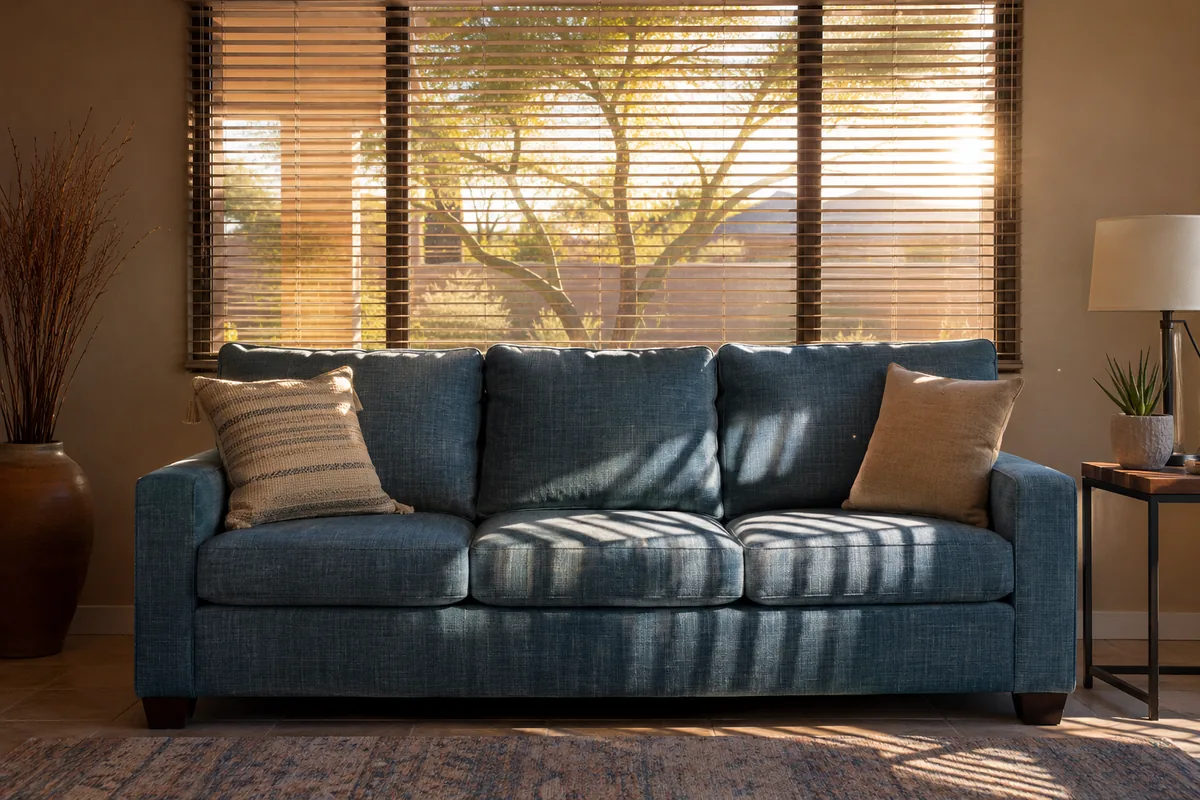
Strong sun is the other factor. American Leather notes that continuous direct sunlight “can fade even the most resilient fabrics.” If a sofa sits in front of a west-facing window, use blinds or curtains in the afternoon, or move it out of the direct light. No cleaning method can bring back color that sun has faded.
What to tell a professional upholstery cleaner
A good cleaner checks the fabric before choosing a method, so a few details up front lead to a better result and fewer surprises:
- The cleaning code on each piece, or that the tag is missing
- What the stains are (coffee, pet accident, ink, grease) and how old they are
- What has already been tried, especially any home spot cleaner, since some leave residue
- Pets and kids in the home, and any areas that see heavy use
- The fabric type if you know it (microfiber, cotton blend, velvet, linen)
Sea Breeze offers professional upholstery cleaning in Tucson for sofas, couches and chairs. Before cleaning, our team checks the fabric, color and condition and explains the recommended approach. Then we pay extra attention to heavily soiled areas and finish with a final inspection. On average, upholstery takes about six to eight hours to dry after cleaning. Plan to keep people and pets off it until it’s dry.
FAQ
What does a W cleaning code mean on a couch?
W means the fabric can be cleaned with water-based cleaners, such as upholstery shampoo or foam. Use them lightly and don’t soak the fabric.
Can you use water on an S-code couch?
No. S means solvent only. Water, even on a small spill, can leave rings or damage the fabric. Blot with a dry cloth and use a water-free upholstery solvent, or call a professional.
Is WS the same as SW?
Yes. Manufacturers use both labels for fabric that can take either water-based or solvent-based cleaners, as long as you don’t saturate it.
Can X-code upholstery be cleaned at all?
You can vacuum it and brush it lightly. Don’t use water or solvent cleaners yourself. For stains or a deeper clean, have a professional look at it.
How often should upholstery be professionally cleaned?
Every 12 to 18 months is a good rule. Clean it more often if you have kids or pets or if the furniture gets heavy daily use.